How to Identify the Key of a Song by Ear
Short answer: to find the key of a song by ear, listen for the note that sounds like “home” when the music stops, hum it, find it on an instrument, and check whether a major or minor chord built on it fits the song. The first note is often not the key; phrase endings, the bass and the final chord are better evidence.
You do not need perfect pitch for this. The skill is hearing which centre the notes lean towards, not naming a pitch from memory. A virtual piano is enough to check your answer.
What the tonic is, and why the first note misleads
A key is the centre that a song’s notes and chords gather around. That centre is the tonic: when a phrase returns to it, the listener hears arrival or rest. A song in G major mostly uses the notes of the G major scale and makes G its home, yet it can start on D, move through a C chord and end one phrase on B.
So instead of asking “What was the first note?”, ask: if the song stopped here, which note would sound finished? A singer may start on the third or fifth of the scale, and an instrumental intro may open on the dominant. Shifting your attention from absolute pitch to function makes the task much easier; the guide to relative pitch versus perfect pitch explains the difference.
Find the key in six steps
1. Listen once without stopping
Do not try to name chords yet. Notice which sections feel settled and which feel tense. On the second listen, choose a section with a clear melody and a complete phrase: the end of a verse, the end of a chorus or the final repeat tells you more than a short instrumental link.
2. Find the note you would sing if the song stopped
Pause at the end of a phrase and hum the note you expect the music to land on. Keep humming as the recording continues: if it stays comfortable while the chords change, it is a strong tonic candidate. If it only fits one chord, it is probably a note of that chord. If the note is out of your range, sing it an octave higher or lower.
3. Check the note on an instrument
Find the note you hummed on a piano, guitar or virtual piano and play it along with the recording. If it keeps clashing at important arrival points, you have probably picked a nearby chord tone; try a semitone above and below.
4. Compare major and minor on the same root
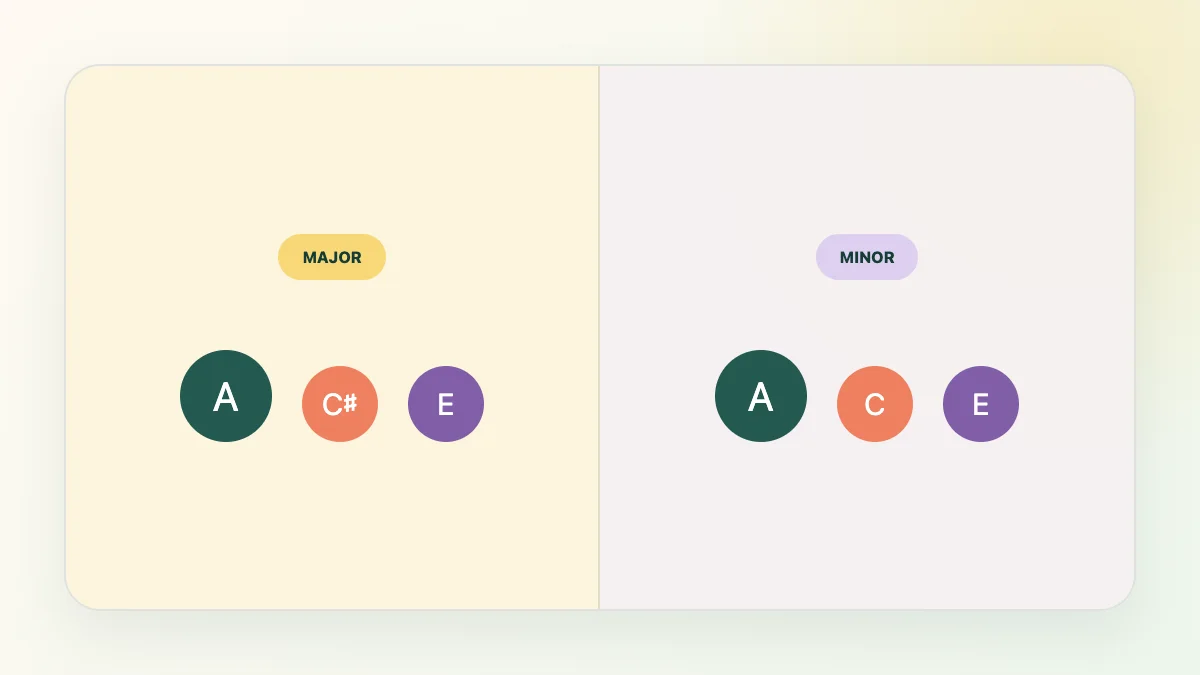
Play a major triad, then a minor triad, on your candidate. If the candidate is A, compare A–C♯–E with A–C–E. The difference is the third: four semitones above the tonic in major, three in minor. Decide from the strong arrival in the chorus and the ending; a brief minor chord in a major song, or a major chord in a minor song, is normal.
5. Follow the bass and where the chords resolve
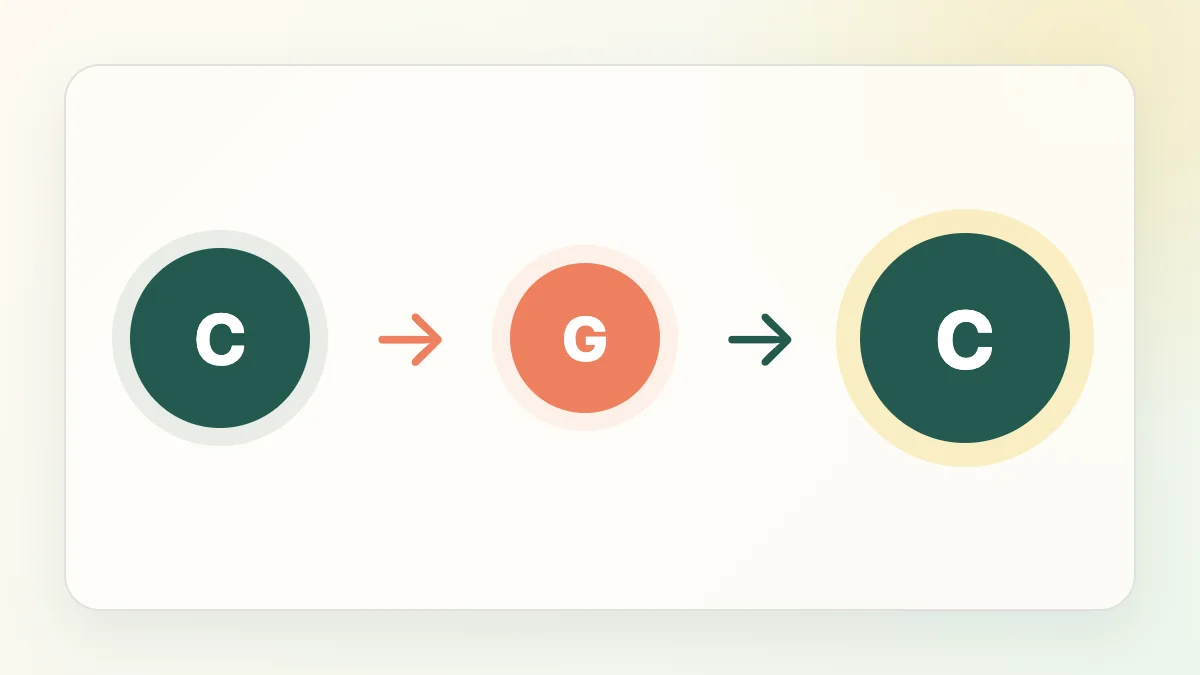
Track the lowest note at the end of each phrase. If the bass keeps returning to your candidate and several chord changes seem to move towards it, the evidence gets stronger. The dominant, the fifth degree of the scale, pulls towards the tonic: G in C major, B or B7 in E minor. Pedal notes and inversions can blur this clue; a C/E chord has E in the bass but is still a C chord.
6. Confirm with the scale and the ending
Play the likely scale slowly over a quiet section. Most notes should sit naturally; a few outside notes may be passing tones or borrowed chords. The final chord is important evidence, though a song can end on a suspended chord or an open fifth. If the scale fits the verse but not the chorus, do not force one answer; see the section on key changes below.
How much is each clue worth?
Clues do not carry equal weight. The first note or a brief ornament in the background is weak evidence; a stable note that keeps returning at phrase endings, the point the chorus resolves to and the final cadence are strong. If you have two candidates, fill in this table for each one.
| Clue | What it tells you | How to test it |
|---|---|---|
| Final chord | Can show a strong point of rest. | Sing your candidate tonic over the last chord. |
| Bass line | Shows chord roots and where cadences move. | Find the last two bass notes at phrase endings. |
| Melodic resting notes | Shows where phrases relax. | Hum the endings of the verse and chorus separately. |
| Major or minor third | Separates the quality of the centre. | Play the major and minor triad on the candidate in turn. |
| First note | Only shows where the song begins; weak evidence. | Ignore it if it disagrees with the rest of the song. |
If you can hear chords, look at the pattern rather than a single label: one chord that sounds like home, one that creates strong tension and one that prepares it point to tonic, dominant and pre-dominant functions. The chord ear-training guide helps you hear major and minor chord colour.
Modal songs, key changes and recordings that are slightly off pitch
Modal songs. Not every song is simply major or minor. A song centred on D can use the notes of G major; that is the colour of D Dorian. Find the centre first, then look for the note that separates it from plain major or natural minor, and name the result, for example “D Dorian” or “E Mixolydian”.
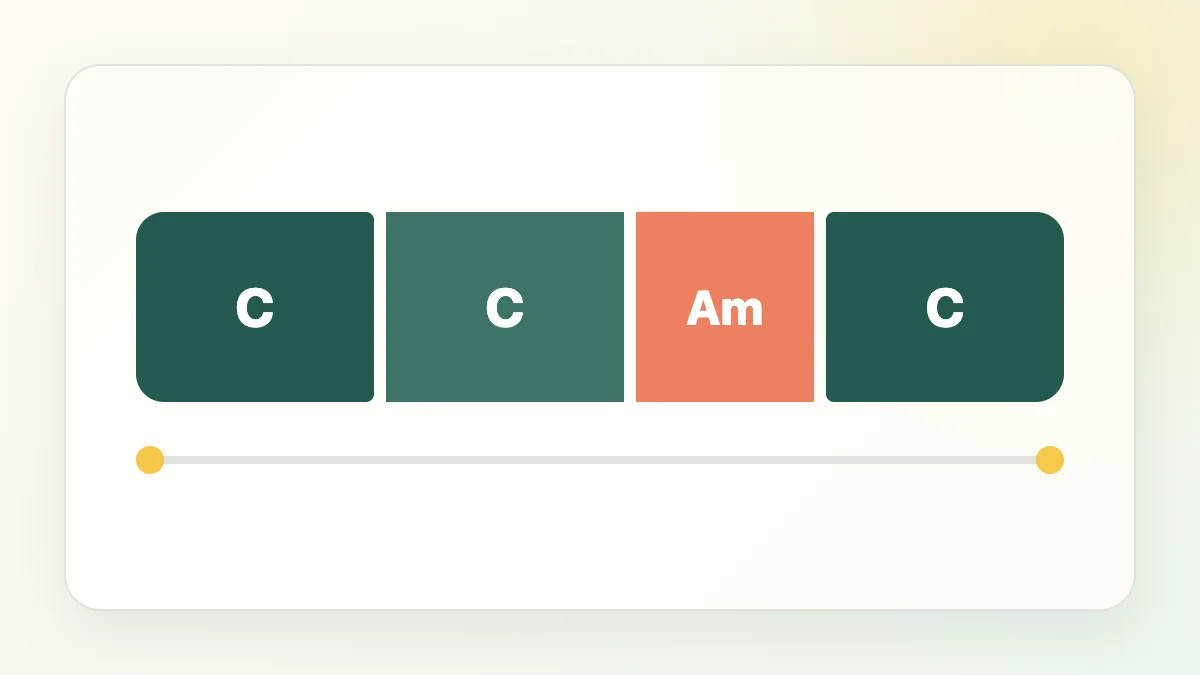
Key changes. Some songs modulate in the bridge or the last chorus. Do not average the sections into one key; listen to each section separately and find the bar where the centre moves. If a chord is briefly emphasised and the old centre returns straight away, that is a passing colour, not a full key change. The right answer may be “verse in E minor, chorus in G major”.
Slightly sharp or flat recordings. Older recordings and live performances can sit away from standard tuning. Work out the relationships by ear first; if your candidate keeps rubbing slightly against your instrument, the problem may be tuning rather than key. If reverb or a bass-heavy mix blurs the evidence, turn the volume down or switch between headphones and speakers.
Five mistakes that lead to the wrong key
- Taking the first note as the key. Always compare the opening with a complete phrase and its ending.
- Following the brightest sound. A high guitar riff or vocal grabs attention but does not show the key on its own; follow the bass and the cadences.
- Assuming the most frequent note is the tonic. A repeated dominant or ostinato can hide the tonic. A note on a strong beat at the end of a phrase means more.
- Mixing up relative major and minor. E minor and G major share a key signature but have different centres, so counting sharps and flats does not answer the question by itself.
- Checking a key-finder app first. Automatic tools can be wrong with modal, modulating or heavily processed recordings. Treat the result as a second opinion and confirm why it fits by ear.
A one-week practice plan
Ten minutes a day is enough. Start with songs that stay in one key and have a clear bass line and a definite ending; leave dense jazz harmony and multiple key changes for later.
- Days 1–2: play major and minor triads and sing their roots. Listen to short phrases and hum the note that sounds finished.
- Days 3–4: compare the tonic with the dominant. Find the tonic you hummed on an instrument.
- Days 5–6: analyse simple songs with clear endings, then move on to songs with inversions or a prominent bass riff.
- Day 7: review your notes and write down the clue that misled you most often.
For each song, note your first guess, the confirmed key and the clue that settled it. A note such as “G felt stable at the end of the chorus; A minor fitted the verse but not the chorus” tells you what to listen for next time. Once you know the key, the find-notes-by-ear method helps you work out the melody, and the transposition guide shows how to move the song to another key.
Common questions
I do not have perfect pitch. Can I still find the key?
Yes. You can hum the note the song returns to and find it on an instrument without knowing its name in advance. Two or three candidates at first is normal; replay the end of the chorus and sing each candidate in turn.
Can I treat the first chord as the key?
Not without checking. The first chord is often the tonic, but a song can open on the dominant, a passing chord or an inversion of the tonic. Compare the first chord with the end of the verse and the end of the chorus; if all three point to the same centre, you can be more confident.
Two keys both sound right. Which should I choose?
Split the song into sections and listen to each ending separately. If the same note sounds like home in every section, choose it. If the sections settle on different centres, do not force one answer; describe the key change.
How can I check related listening skills?
The ear-training test gives you a short starting point on basic listening skills. It does not measure key finding directly; that skill grows by working with real songs. For a wider routine, see how to train your ear.