How to Count Rests in Music: Values and Practice
Music-reading workshop
A rest is timed silence, not a pause in the beat. If a quarter note equals one beat, a quarter rest lasts one beat, a half rest two and an eighth rest half a beat. Keep the pulse moving through the silence so that you come back in at exactly the right moment.
Silence belongs inside the measure
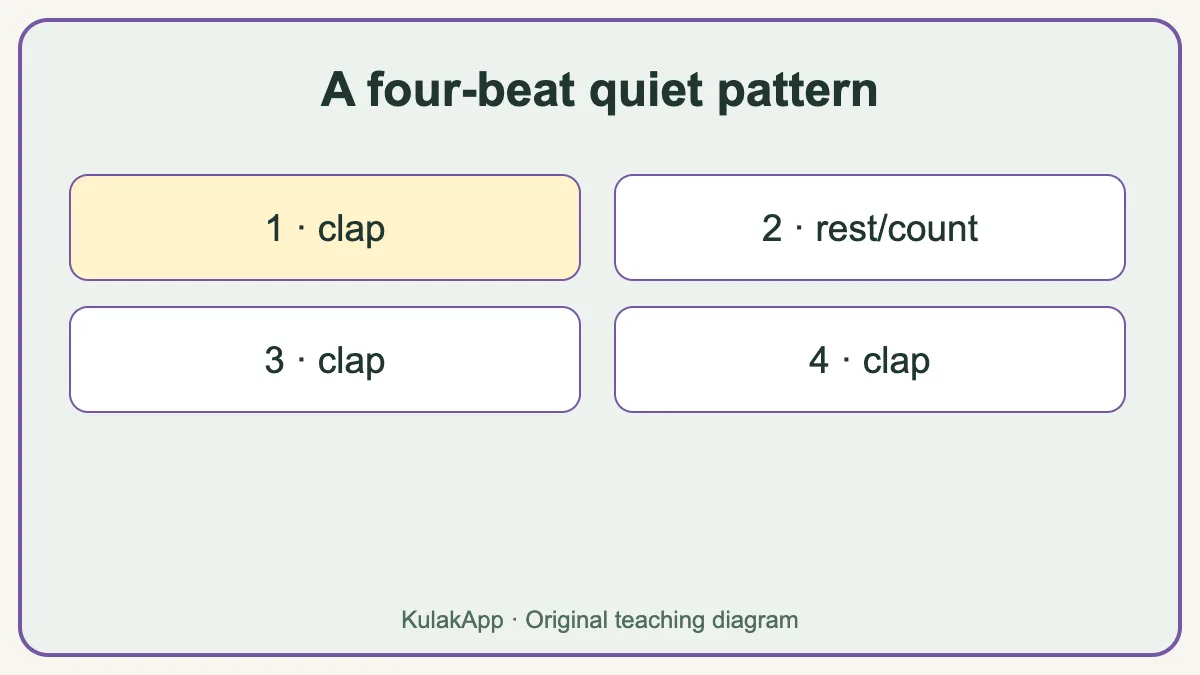
Clap four even beats while counting one, two, three, four. Repeat the count but leave out the clap on two. Beat two has not disappeared; it has become a silent part of the pattern. If you count only the claps, beat three arrives too early. Keep the silent beat present with a quiet finger movement or by speaking the count, and check with a slow metronome that your next clap still lands on three.
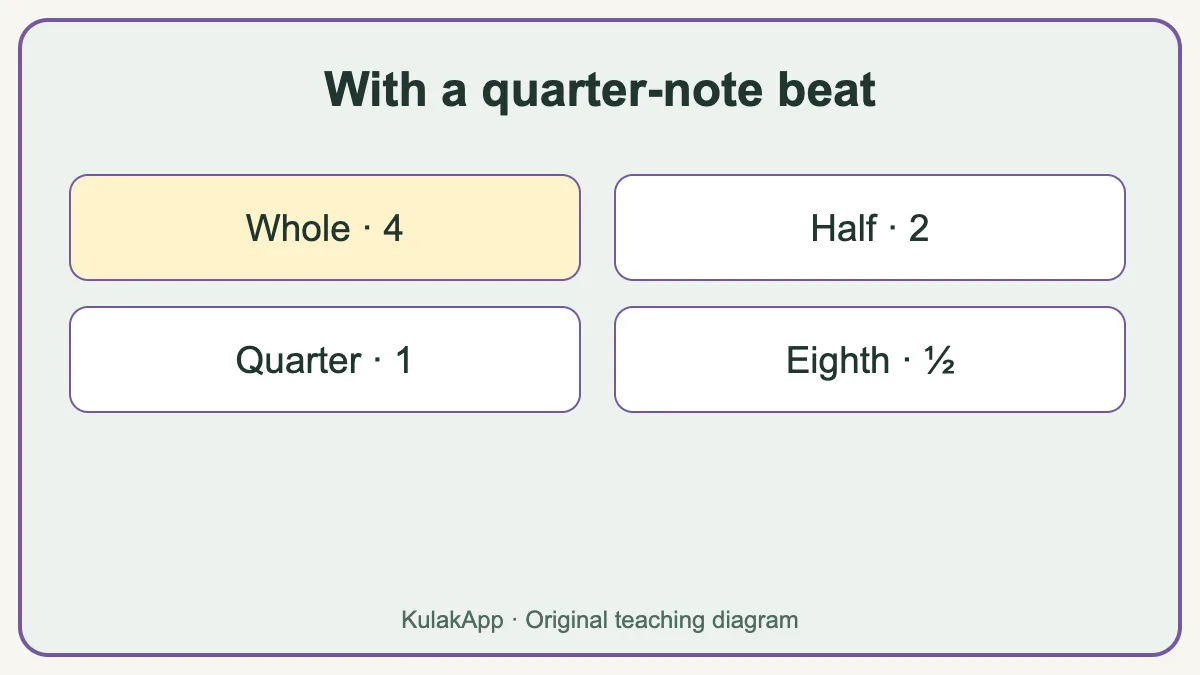
Compare the common values
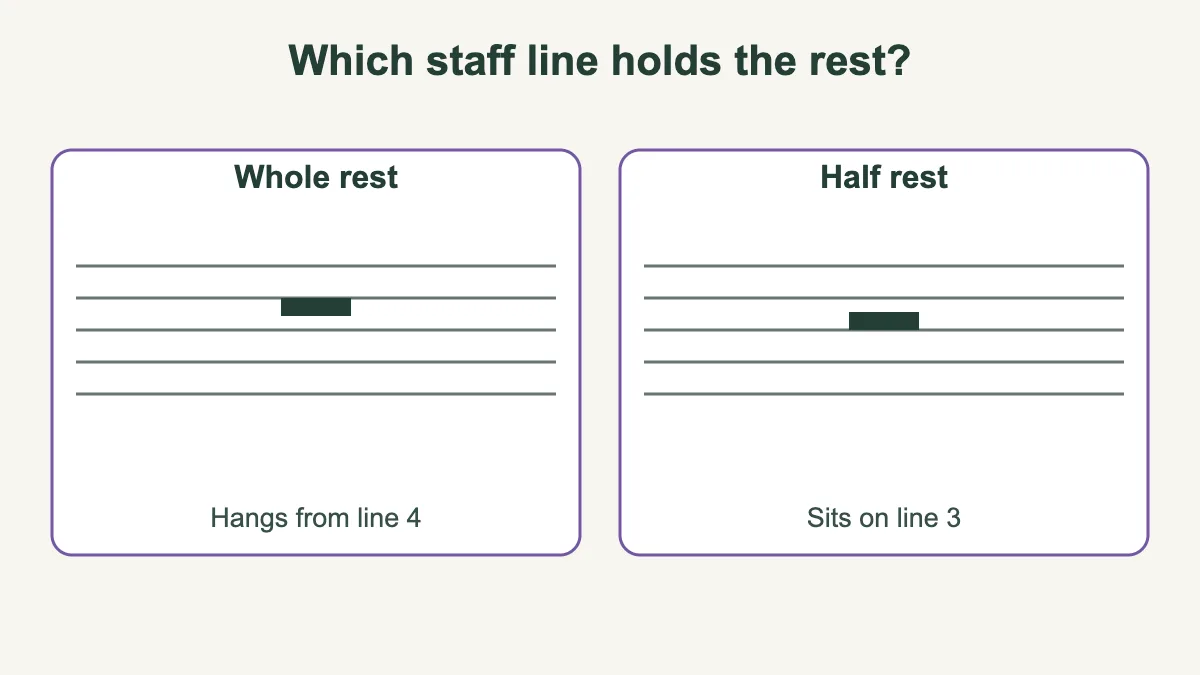
With a quarter-note beat, a whole rest lasts four beats, a half rest two, a quarter rest one and an eighth rest half a beat. The whole and half rests look alike, so check their position: a half rest sits on the middle (third) line, while a whole rest hangs below the fourth line from the bottom. English lessons may also use two naming systems for the same symbols:
| American name | British name | Quarter-note units |
|---|---|---|
| Whole rest | Semibreve rest | 4, when used as a duration |
| Half rest | Minim rest | 2 |
| Quarter rest | Crotchet rest | 1 |
| Eighth rest | Quaver rest | ½ |
| Sixteenth rest | Semiquaver rest | ¼ |
The beat values assume the quarter note as the unit. In music felt in half-note beats, a quarter rest is half a main beat; in compound meters, three eighths often form one beat.
Find the exact moment after an eighth rest
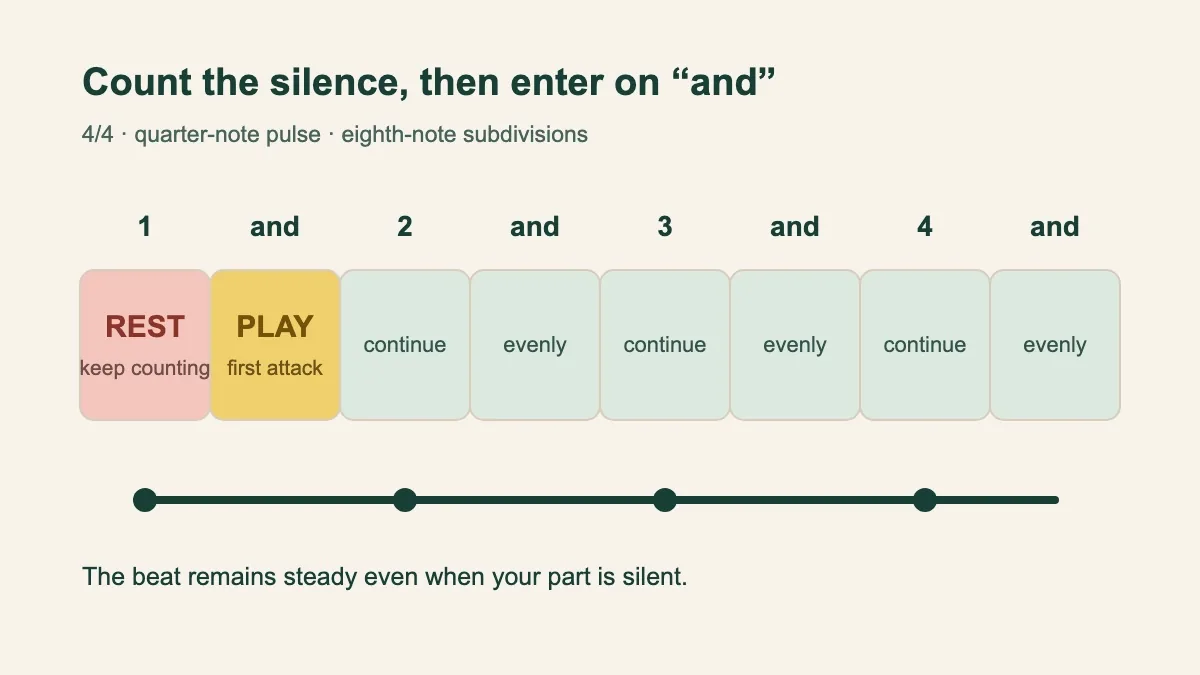
An eighth rest often causes more trouble than a quarter rest because the next note can fall between the numbered beats. In 4/4, count “one-and, two-and, three-and, four-and”. With an eighth rest on “one” and an eighth note on the following “and”, the first sound arrives halfway through beat one: not on two, and not pulled back towards one because the silence feels uncomfortable. Then try the reverse, sound on one and silence on its “and”; the beat lasts just as long, but the silent half has moved.
Practise the end of a note as well as the next entry
A rest has two edges: the previous note must stop and the next must start. With a quarter note, a quarter rest and a half note in 4/4, start on one, stop as two begins, stay silent through two and play the half note on three. Holding the first note into the rest is a different rhythm even if the entry is on time. How you stop the sound depends on the instrument (releasing a key, damping a string, ending the breath), so practise the timing first with claps.
A whole-measure rest is not always four beats
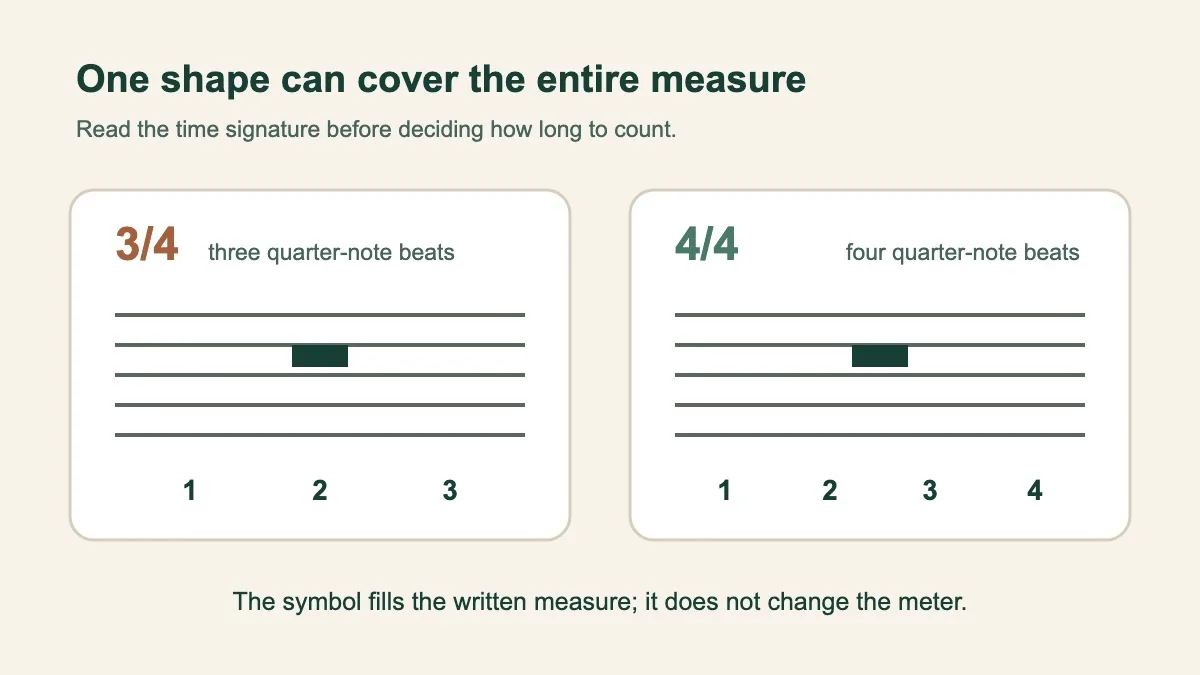
Centred in an otherwise empty bar, the whole-rest shape means “silence for the whole measure”, whatever its length. In 3/4 it covers three beats, in 4/4 four. Before two silent 3/4 bars, count “one-two-three, one-two-three” and come in on the next one; do not add a fourth beat because the symbol looks like a four-beat value. A multimeasure rest replaces several empty bars with one sign and a number; keep track of both the bar count and the beats inside each bar.
Dotted rests
A dot adds half the original duration: with the quarter note as the unit, a dotted quarter rest lasts one and a half beats and a dotted eighth rest three quarters of a beat. Count a dotted quarter rest as three eighth-note subdivisions before the next sound. Composers often prefer two shorter rests to one dotted rest when that keeps the beat divisions easier to see.
To practise with a steady pulse, use the online metronome; to train the rhythmic ear, try rhythm ear training.
Keep the silent beat exercise
In 4/4, assign note–rest–note–rest to four quarter beats. At a slow 60 BPM, tap gently on one and three and keep your hand quiet on two and four. Count the four numbers aloud before trying it. Then reverse the positions: rest on one and three, tap on two and four. Follow your steady spoken count rather than a hand that rushes through the silence.
Show the answer and count
The first pattern sounds on beats 1 and 3; the reversed one sounds on 2 and 4. Both bars still contain four quarter beats. The metronome does not stop during rests.
Check your understanding
Answer aloud or on paper before opening each response. If you miss one, return to the first diagrams and identify the step you skipped.
Does a rest stop the tempo?
No. Keep counting through the silent duration.
Is a whole rest always four beats?
A whole-measure rest can fill a measure of another length.
How long is an eighth rest?
Half a quarter-note beat in this example.
Continue listening in KulakApp
This guide explains written music. After the short web exercises, use the app for a broader listening routine and progress tracking.
Fact check: Open Music Theory: rhythmic and rest values · Open University: rhythm values. Examples and diagrams are original KulakApp work.